by Rachel Laramee
As Ramadan draws to a close, Bruneians are gearing up for Hari Raya Aidilfitri, an important festival for families and friends. Expats can expect Brunei to be especially quiet during the public holiday; many shops will be closed. Also, be prepared for long queues at petrol stations during the days preceding Hari Raya as people fill up their cars in preparation for road journeys to visit family and friends.
To find out more about what this festival means to Bruneians, I had the pleasure of speaking with Rasidah Daniel, a geologist at Brunei Shell Petroleum (BSP). Rasidah lives in Seria but travels with her family to her grandparents’ house in Bandar for the holiday.
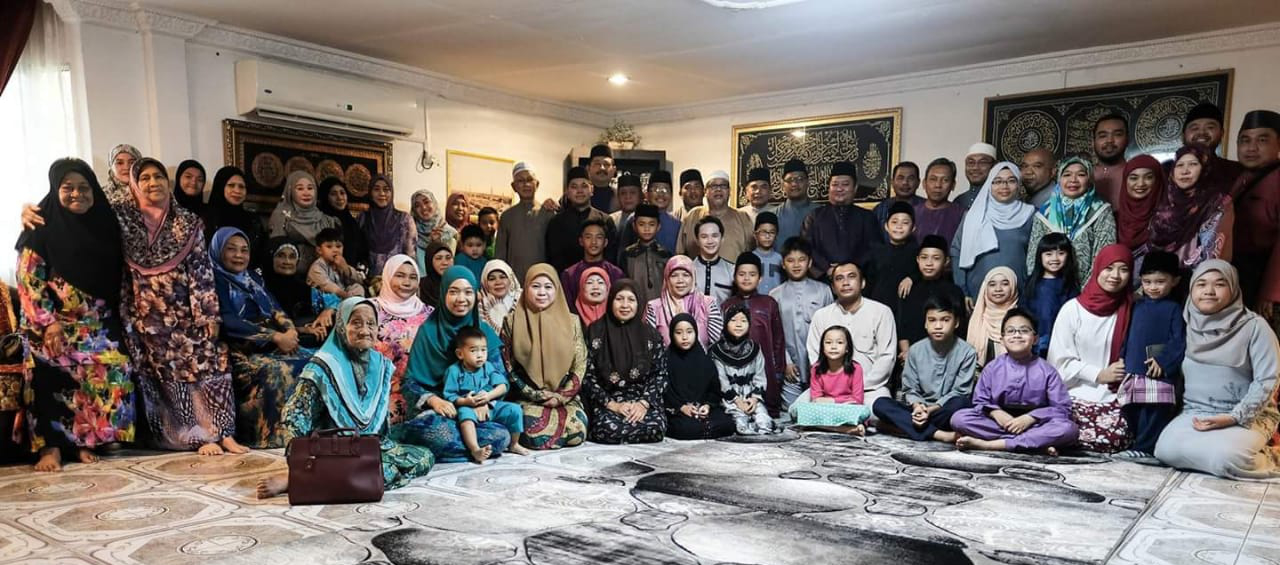
“Usually in the morning we start with the Hari Raya Aidalfitri prayer… A special prayer only for the morning of Hari Raya,” she explained. After that, they change into new clothes made for the occasion. “It’s not a must, but it’s a way to celebrate,” she said. “Usually we color coordinate.” Lots of family photos will be taken as the family gathers.
After the prayer, families seek forgiveness from one another for wrongs committed over the course of the year. It’s a time for families to resolve conflicts and strengthen their bonds.
“For me… Hari Raya is actually a very emotional moment,” Rasidah shared, “where you get that forgiveness from all the people, regardless of younger and older than you… Especially in a family you might have a glitch, like not talking to this person, maybe years not talking to each other. So… if that person finally comes home, that is a very memorable year.”
What Hari Raya is also known for, and the part that a lucky expat might experience, is the tradition of hosting open houses so families and friends can visit and celebrate together. These open houses continue throughout the month after Ramadan, but the ones during the beginning of Hari Raya are the most important. Preparations start a week or two before the end of Ramadan.
“One of the things we usually do before Hari Raya is a house clean-up,” Rasidah said. “It’s a deep clean: windows, under the chairs, the fan. Really getting prepared for people to come into the house.” People also decorate the outside of their houses with lights; when the lights are on, visitors know their hosts are ready to receive them. It’s common for many cars to arrive all at once to an open house.
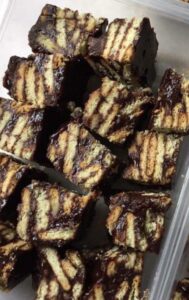 Of course, the importance of Hari Raya refreshments cannot be overstated. Satay (marinated chicken or beef skewers) is standard, along with the usual ketupat (steamed rice dumpling) and peanut sauce accompaniments. The famous beef rendang is also a big favorite. For sweets, people serve kuih moor (round ghee cakes rolled in powdered sugar) and kuih tapak kuda (horseshoe-shaped cake filled with nutella). For larger gatherings, Bruneians some- times hire caterers, often with live cooking stations for anything from paratha to sizzling noodles to burgers. Also, it’s become popular to have an ice cream truck on hand for dessert.
At Rasidah’s grandparents’ house in Bandar, she meets her siblings (she has six) and her cousins (she has 15). And that’s just the beginning of the first day.
“My grandfather is actually the first son between his siblings, so throughout the day his younger siblings will come with their families to visit… Usually a big family gathering.”
On the second day of Hari Raya, her grandparents open their house to friends and relatives; the whole family pitches in to help with the hosting logistics. On the third day, the family travels as a group to meet other friends and families. They go in a convoy with as many as 10 cars and use walkie talkies to aid in navigation and to communicate ad hoc changes to the itinerary. The walkie talkies also pro- vide plenty of entertainment during the journey.
When I asked about her childhood memories of Hari Raya, Rasidah mentions the green packets known as ang pau (which comes from the Chinese for “red packet” – though the Hari Raya packets are in fact green) containing small amounts of cash given to children by their elders. She also remembers that people used to set off fireworks, which have since been banned. Now her children play with popper toys that make a loud bang but aren’t as dangerous.
It’s no wonder that most Bruneians make it a priority to visit their families during Hari Raya; it’s a festive time to reconnect and enjoy each other, and no one wants to miss it. Rasidah shared about the first time she was away from home for Hari Raya, when she was studying abroad.
“I was actually on my flight to UK during the moon sighting,” she remembered, “and then the next day was Hari Raya. Good thing there were a bunch of Bruneians there already so it was not all lonely, but it was my first time being away from home. I cried like a baby.” She laughed sheepishly.
Thankfully, this year Rasidah will be home with her family, enjoying all the fun of Hari Raya.